
The 2nd International Electronic Conference on Applied Sciences
the chairs
Dear Colleagues,
It is our pleasure to invite you to join the 2nd International Electronic Conference on Applied Sciences (ASEC 2021) that is hosted online by https://sciforum.net/conference/ASEC2021.
Two decades have passed since the first year of the 21st century. The speed of the development of sciences and technologies are growing ever faster today than in the previous century. The field of science is expanding, and the structure of science is becoming ever richer. Because of this expansion and fine structure growth, researchers may lose themselves in the deep forest of the ever-increasing frontiers and sub-fields being created. This open-access journal, Applied Sciences, was started to help all scientists conduct their own research into the growth of these frontiers by breaking down barriers and connecting the many sub-fields in order to cut through this vast forest. These functions will allow researchers to see these frontiers and their surrounding (or quite distant) fields and sub-fields, and give them the opportunity to incubate and develop their knowledge even further with the aid of this multi-dimensional network.
ASEC 2021 aims to promote and advance the exciting and rapidly changing field of all aspects of applied sciences. Topics of interest include, but are not limited to:
- Optics and Lasers (Session A)
- Chemistry (Session B)
- Applied Biosciences and Bioengineering (Session C)
- Environmental and Sustainable Science and Technology (Session D)
- Applied Physics (Session E)
- Computing and Artificial Intelligence (Session F)
- Applied Dentistry (Session G)
- Foods Science and Technology (Session H)
- Mechanical Engineering (Session I)
ASEC 2021 will enable you to share and discuss your most recent research findings with the worldwide vibrant community of scientists and engineers in the field.
ASEC 2021 will make your presentation accessible to hundreds of researchers worldwide, with the active engagement of the audience in question and answer sessions and discussion groups that will take place online.
Submitted abstracts will be reviewed by the conference committee. The authors of accepted contributions will be invited to produce an extended abstract for the conference proceedings along with a slide presentation of their work. Following the conference, outstanding contributions will be invited to be submitted for publication in Applied Sciences (https://www.mdpi.com/journal/applsci).
ASEC-2 is a new and exciting experience for me that I believe that it is a taste of the future. ASEC-2 will revolutionize dissemination in the field with a brand-new tool for sharing research in an online environment that will preserve the same standards and structure of traditional conferences but will be more inclusive by breaking the cost and time barriers that prevent participation in remote events.
I hope you will join us and present your work at ASEC 2021, and be part of this thriving online experience.
Kind regards,
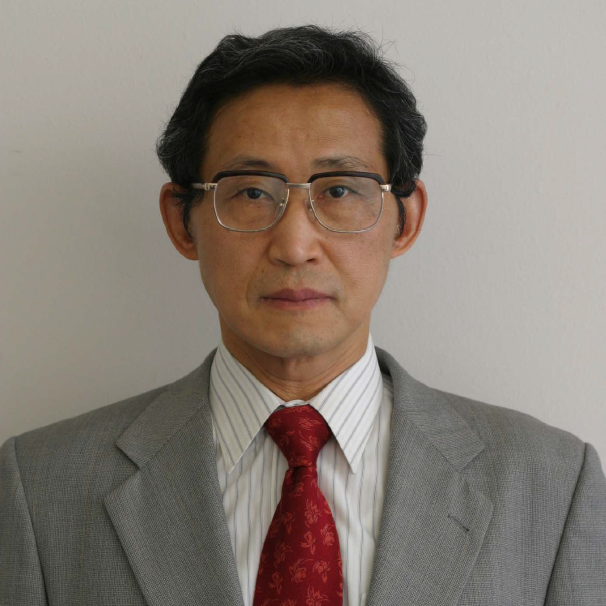
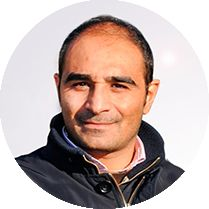
Prof. Dr. Takayoshi Kobayashi and Prof. Dr. Nunzio Cennamo
Chair of 2nd International Electronic Conference on Applied Sciences
Conference Secretariat
Mr. Melon Zhang
MDPI Branch Office, Wuhan
E-mail: asec2021@mdpi.com
Ms. Hobby Hou
MDPI Branch Office, Beijing
E-mail: asec2021@mdpi.com
Meet the Event Chairs
Important Dates

- Abstract submission deadlineAug 09, 2021
- Abstract acceptance notificationAug 30, 2021
- Full file submission deadlineSep 13, 2021
Meet Our Speakers

Prof. Alessandra Maria Bossi
University of Verona, Italy;
Alessandra Maria Bossi's research activity focuses on the development of protein and peptide recognition biomimetic nanomaterials, prepared be the strategy of molecular imprinting of polymers (MIPs and nanoMIPs) and in their integration in analytical methods, assays and bio/sensors.
AM Bossi activities in the Analytical Sciences involve the application of nanoMIPs to optical and electrochemical sensing platforms. AM Bossi is active also in the integration of nanoMIPs to cells and for cells, studying molecularly imprinted nanoparticles for protein refolding and as tools for biomolecular interaction.
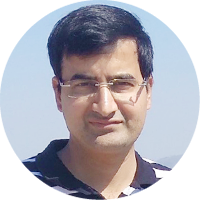
Dr. Anuj K. Sharma
National Institute of Technology Delhi, India;
Anuj K. Sharma received the M.Sc. degree from Indian Institute of Technology (IIT) Roorkee, India, in 2001 and the Ph.D. degree from IIT Delhi, India, in 2006, both in Physics. Post-Ph.D., he was awarded the Alexander von Humboldt Fellowship to work at Friedrich-Schiller University, Jena (Germany) during 2007–2008. During July 2008–May 2010, he worked at ASML Netherlands B.V., Veldhoven, The Netherlands, as a Technical Analyst (Semiconductor Lithography). He is currently an Assistant Professor of Physics with the National Institute of Technology Delhi, India. His current research areas include Plasmonics in thin films and gratings, optical sensors, fiber optics, nanophotonics, photonic device modelling, and technology management. He has authored or co-authored over 90 research papers in different reputed international journals published by Elsevier, IEEE, OSA, AIP, IOP, SPIE, Springer, etc. He is the Principal Investigator of a CSIR (India)-sponsored research project on “Plasmonic devices based on metallic nanostructures.” and SERB (India)-sponsored Core Research project on "Role of spin waves and magnonics in plasmonics-based photonic devices". He has authored/co-authored three chapters in a couple of books published by Springer (Fiber Optic Sensors: Current Status and Future Possibilities, 2017) and Elsevier (Handbook of Nanomaterials, 2021). He has reviewed/adjudicated more than 100 research articles for different international journals. He is an Associate Editor of Optical Fiber Technology (since February 2019) and of IEEE Sensors journal (since April 2019). He has guest-edited a special issue on “Fiber optic sensors with plasmonic nanostructures and gratings: applications and new perspectives” for MDPI Sensors journal (2020).
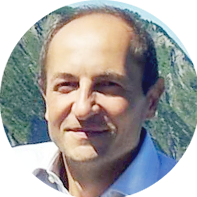
Prof. Bruno Andò
DIEEI-University of Catania, Italy;
Bruno Andò (IEEE M’97-SM’13) received the M.S. in Electronic Engineering and the Ph.D. in Electrical Engineering from the University of Catania, Italy, in 1994 and 1999 respectively. Currently he is an associate professor in measurement science at the Electric, Electronic and Information Engineering Department of the University of Catania. From 1999 he worked as a researcher with the Electrical and Electronic Measurement Group, within the same department of the University of Catania. His main research interests are sensors design and optimization, rapid prototyping of sensors, new materials for sensors, smart multi-sensor architectures for environmental monitoring and Assistive Technology, nonlinear techniques for signal processing.
Currently, he is Associate Editor of the IEEE Transactions on Instrumentation and Measurements, he is the Editor In Chief of the IEEE Instrumentation and Measurements Magazine he belongs to the EB of the MDPI Sensors Journal.
During his activity Dr. Andò has co-authored several scientific papers, presented in international conferences and published in international journals and books.
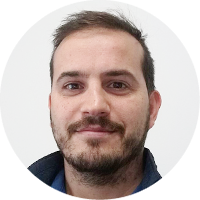
Prof. Dr. Carlos Marques
University of Aveiro, Portugal;
Expertise on optical fiber sensors and optical devices for optical communications and sensing. He received the Ph.D. degree in Physics Engineering from the UA, Portugal, in 2013. He was a Marie Curie (MC) Fellow in the Aston Institute of Photonics Technologies, Aston University, U.K until March 2016. Currently, he is a Research Scientist in the Physics Department & I3N, University of Aveiro, Aveiro, Portugal. His main interests include optical fiber devices for sensing, integrated optics, low cost interrogation systems, machine learning, data acquisition and optical transmission data. He authored or co-authored 3 books, 5 book chapters, 150+ journal peer-review papers, more than 95 conference papers with emphasis on optical communications, data processing and sensing. According to Google Scholar, journal/conference articles have received over 3000 citations (h-index: 37). He was an organization member of IMOC2019 conference. He was awarded with several awards. Also, he is an Associate Editor of prestigious scientific journals like OSA Optics Express, IEEE Sensors Journal, Optical Fiber Technology (Elsevier) and acts also as referee of several high level international journals, receiving awards by review quality. He is a regular expert evaluator of international research projects of different countries. He is a regular TPC member of some conferences of Optics and Photonics field, and he is regular invited to be session chairman in some international conferences. Last 8 years, he participated/ leaded in several research projects including national projects from FCT agency, European projects including Marie Curie actions (Individual Fellowship, ITN), FET, and other international from Brazil (CAPES, FAPES, CNPq, etc). Currently, he is the coordinator professor of Optical Technologies, and Lasers and Photonics , Physics Engineering doctoral programme and Integrated Master, respectively.

Prof. Christophe Caucheteur
University of Mons, Belgium;
Christophe Caucheteur received the Master's degree in electrical engineering in 2003 and the Ph.D. degree in applied sciences in 2007 from the Faculté Polytechnique de Mons, Belgium. He is currently a Senior Research Associate of the F.R.S.-FNRS at the University of Mons and he is the head of the Advanced Photonic Sensors ERC unit. He is the coauthor of about 250 papers in international journals and conference proceedings. He is also coauthor of six international patent applications regarding the development of innovative fiber Bragg gratings sensors. He received a European Research Council Starting Grant for a research project focused on the development of innovative plasmonic biochemical optical fiber sensors.

Dr. Cosimo Trono
National Research Council, CNR-IFAC, Italy;
I am a senior scientist at Institute of Applied Physics “Nello Carrara”, Italy. I graduated in Physics and I received the PhD in Non-Destructive Testing. Main interests concern optics, optical fibers, and sensor science. My knowledge and expertise include the design, fabrication and characterization of optical fiber sensors systems for physical parameters (e.g. strain, temperature, pressure, acoustic signals) and for chemical/biochemical parameters, of label-free and label based optical biosensors, and the design and development of microfluidic systems for optical bio-chemical sensing applications. I’m author of more than 140 scientific publications in peer reviewed journals, books and conference proceedings.
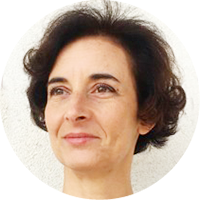
Dr. Laura Pasquardini
Indivenire srl, Italy;
I graduated in Physics at the University of Trento in 2000. I worked for many years as a researcher at the Fondazione Bruno Kessler in Trento and at the University of Trento, working on the development of micro- and nanodevices and biosensors for genomics and proteomics. My expertise covers several research fields: development and characterisation of biointerfaces, molecular biology, high-resolution imaging. I am the author of more than 50 articles in peer-reviewed scientific journals, co-organiser of three international schools and co-author of three dissertations. Since 2018 I co-founded Indivenire srl, a small enterprise offering an R&D outsorcing service.
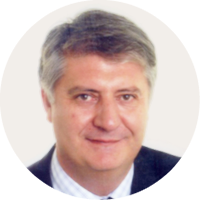
Prof. Dr. Manuel Lopez-Amo
Universidad Publica de Navarra, Spain;
Manuel Lopez-Amo is a full professor in photonics at the Electrical and Electronic department of Universidad Pública de Navarra (Spain) since 1996. He is the head of the optical communications group of this department. He has been Chairman of the Optoelectronic Committee of Spain. He has been the director of the Engineering Faculty and of the Electrical and Electronic department of Universidad Pública de Navarra. He has been the leader of more than 60 research projects and he has coauthored more than 350 works in international refereed journals and conferences related with fiber-optic networks, fiber-optic sensors, fiber-optic amplifiers and lasers and integrated optics. He has supervised 18 PhD theses about Photonics. He is a member of the technical committees of the International Conference on fiber optic sensors (OFS) and the European Workshop on optical fiber sensors (EWOFS), among others. Professor Lopez-Amo is senior member of the IEEE.
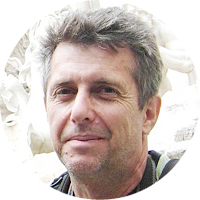
Dr. Marcelo Werneck
Universidade Federal do Rio de Janeiro, Brazil;
MARCELO MARTINS WERNECK was born in Petrópolis, Rio de Janeiro, Brazil, and graduated in Electronic Engineering from the Pontifical Catholic University of Rio de Janeiro (PUC) in 1975. He obtained his MSc from the Biomedical Engineering Program at COPPE, Federal University of Rio de Janeiro (UFRJ) in 1977. In 1978 he joined the Department of Electronics and Computing at UFRJ where he is currently a Full Professor. His Ph.D. was obtained by the University of Sussex, UK, in 1985. He is currently coordinator of the Instrumentation and Photonics Laboratory of the Postgraduate Electrical Engineering Program at COPPE where he develops research in optical fiber sensors, instrumentation, and transducers. In 2014, he joined the Postgraduate Nanotechnology Engineering Program where he develops research in nanophotonics and nanobiosensors. His research is concentrated in the areas of Electrical Engineering, Oil & Gas, and Biotechnology.

Dr. Paola Zuppella
National Research Council-Institute for photonics and nanotechnologies (CNR-IFN), Italy;
Paola Zuppella obtained the PhD in Physics in 2009 at L’Aquila University, Italy. Since October 2011, she is researcher at the Institute for photonics and nanotechnologies (CNR–IFN) Padova. Paola is an experimental researcher with a background in applied physics. She is focused on the development and characterization of optical coatings for optical components and devices, space and solar instrumentation, and biosensors. Teacher in the master “Surface treatments for industrial
applications” (Padova University), she is a member of the school committee of the graduate School of Science, Measurements and Spatial Technologies of Padova University; she was Co-I of PHEBUS instrument on board the BepiColombo ESA mission; she is Co-I of METIS instrument onboard the Solar Orbiter ESA space mission; she is involved on the development of the telescope for Ariel ESA space mission. She is in ACPHAST 4.0 and ACTPHAST 4.R and EU projects.
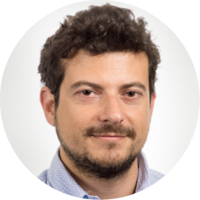
Dr. Pietro Falco
ABB, Corporate Research, Sweden;
Pietro Falco received the Research Doctorate degree in Electronic Engineering in 2012 and until February 2015 he held a Post-Doc position at Second University of Naples. From December 2010 to July 2011 he was a Visiting Scholar at Karlsruher Institute of Technology (KIT) in Karlsruhe, under the supervision of Prof. Dillmann. He participated in several European projects concerning mobile manipulation in unstructured environments such as DEXMART, ECHORD, SAPHARI, EUROC. In 2011, he co-founded the company Aeromechs s.r.l., still very active in research and development of energy management systems for more electric aircrafts. In order to work full time on research, Pietro left the active co-leadership of the company and moved to Munich. In March 2015, he was appointed "TUM Foundation Fellow" at Technical University of Munich and in February he earned a Marie Curie Individual Fellowship for Experienced Researchers with the project proposal LEACON “LEArning-CONtrol tight interaction: a novel approach to robust execution of mobile manipulation tasks". Pietro joined ABB Corporate Research in 2018 as senior scientist and project manager, driving and participating in both internal and European research projects on service robotics for logistics and healthcare. His research interests include machine learning for robotics, observation of human manipulation, robotic mobile manipulation, and Bayesian sensor fusion.
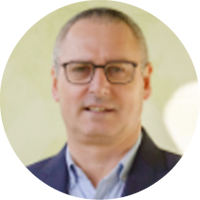
Prof. Dr. Raul Fangueiro
Fibrenamics / University of Minho, Portugal;
Prof. Raul Fangueiro is currently professor and senior researcher in the School of Engineering at the University of Minho, Portugal. He is the Head of the Fibrous Materials Research Group of the same university with expertise in advanced materials (nano, smart, composites) and structures (3D, auxetic, multiscale) with 45 researchers. He is the mentor and the coordinator of the FIBRENAMICS International Platform (www.fibrenamics.com) including 350 partners developing promotion, dissemination, technology transfer and research activities on fiber-based advanced materials. He has more than 170 published papers in international reputed scientific journals, 450 conference publications, 36 books and 40 patents. He is the scientific coordinator of several national and international research projects on advanced fibrous and composite materials, mainly for building, defense, architectural and health-care applications. He supervised various PhD and Pos-Doc scientific works and is the chair of AUXDEFENSE – World Conference on Advanced Materials for Defense and ICNF – International Conference on Natural Fibers. Raul Fangueiro is the founder of the WANFR – World Association of Natural Fibers Research, member of the editorial board of several leading international scientific journals on composite and fibrous materials, and member of several working groups of the European Defense Agency and NATO.

Dr. Robert J. Meier
PreSens Precision Sensing GmbH, Germany;
I'm working in the R&D department of the company PreSens Precision Sensing GmbH. Our company develops, produces and distributes optical chemical sensors for monitoring O2, pH and CO2. I’m specialized on 2D optical sensors and devices. I received my Doctoral degree in Chemistry in 2011 from the University of Regensburg based on research on optical sensing and imaging directed at the application in human wounds and skin. Then I worked as a Postdoc at the Institute of Analytical Chemistry, Chemo- and Biosensors. My main research interests were chemical sensing and imaging especially in biological matrices, such as human wounds, cells, or bacteria.

Dr. Sara Tombelli
Istituto di Fisica Applicata Nello Carrara, CNR, Italy;
Dr. Sara Tombelli is senior researcher at the Institute of Applied Physics (IFAC-CNR) in Florence, Italy. Her research activity is focused on biosensor development, optical sensing and surface modifications with bio-molecules, such as antibodies, enzymes, aptamers and nucleic acid probes. She has also experience in intracellular nanosensors and nanoparticle manipulation. On the above topics she has contributed more than 130 publications on international refereed journals, books and conference proceedings (H-index=42, Scholar). She is member of the Editorial Board of Sensors (MDPI), section Biosensors; she has been Special Issue Editor for Sensors. She participated in several European Projects and in other national and international projects. She is now research unit scientific leader in a national project PRIN. She has been reviewer and referee for the evaluation of international projects such as proposals under the ERC Ideas Specific Programme and the FET programme. She received the National Scientific Habilitation (ASN) as full professor in Analytical Chemistry (Italian Ministry for Research).
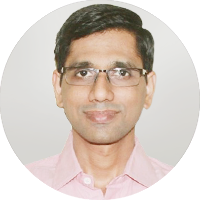
Dr. V V R Sai
Indian Institute of Technology Madras, Chennai, India;
V V R Sai war born in India in 1981. He received the bachelor’s degree in Electronics and Instrumentation Engineering in 2002 from Andhra university and Ph.D. in Biomedical Engineering in 2008 from Indian Institute of Technology (IIT) Bombay, India. After a two-year postdoctoral research at university of Idaho, Moscow, ID, USA, he joined IIT Madras in 2011. He is currently working as an Associate Professor and leads Biosensor Research Laboratory at IIT Madras. His research interests include optical chemical and biosensors for clinical diagnostics, water and food monitoring. He has authored more than 50 international journal and conference papers and filed 7 patents. He is a recipient of prestigious Young Engineer Award from the Indian National Academy of Engineering (INAE) in 2015 for the work done on biosensors research. He runs several international research projects with collaborators in Germany, UK, USA and Norway. A start-up is spun out of the research laboratory to promote U-bent fiber optic probes as a platform for optical sensing applications.

Dr. Vincenzo Carafa
Università degli Studi della Campania “L.Vanvitelli”, Italy;
Vincenzo Carafa is Assistant Professor (RTD-B) in General Pathology at the Department of Precision Medicine, Università degli Studi della Campania “L.Vanvitelli”, Naples, Italy. He graduated in Biology, summa cum laude, in 2005 with a Ph.D. in “Pathology of Signal Transduction” in 2008. From 2009 he obtained several post-doctoral fellowships at the Department of Precision Medicine. In 2014 he has been appointed as senior researcher for the development of new modulators of sirtuins and their use in pharmacology at Siena Biotech. His studies are focused on the involvement of epigenetic processes in the alteration of fundamental signaling pathways responsible of cancer initiation, promotion and progression. In particular, he focuses on the mechanisms of programmed cell deaths and their deregulations.
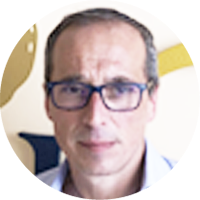
Prof. Dr. Andrea Cusano
Electronics and Photonics Engineering Department, University of Sannio, Benevento, Italy;
Andrea Cusano received his Laurea degree cum Laude in Electronic Engineering on November 27, 1998 from University of Naples “Federico II”, Italy. In 2003 he defended his PhD thesis carried out at the Department of Electronic and Telecommunication Engineering of University of Naples with tutor Prof. Antonello Cutolo. His Ph.D. thesis was focused on “Optoelectronic Sensors for Smart Materials and Structures”. On February 2002, during his Ph.D. student course, he was engaged as Research Fellow at the Department of Engineering at University of Sannio to support Prof. Antonello Cutolo to build up the Optoelectronic Division. Since September 2002 and up to now, he has been also in charge as Professor for several courses of Electronics at the Engineering Department of University of Sannio. On December 30, 2002, he started his service as permanent researcher at the University of Sannio. On December 15, 2005 he won a national competition as Associate Professor at the University of Sannio. His research interests are focused on the suitable merging of optical fibers and nanotechnologies and was the pioneer of the “Lab on fiber Technology” concept, nowadays recognized as an hot topic in nanophotonics.
He was also cofounder of several spin-off companies focused on the development of fiber optic sensing systems for industrial and life science applications: “OptoSmart S.r.l.” in 2005, “MDTech” in 2007, “OptoAdvance” in 2011, Mantid S.r.l. in 2017, Often Medical in 2019.
He published over 400 papers on prestigious international journals and communications in well-known international conferences worldwide; he has close to 20 national and international patents currently in charge of prestigious industrial companies (Ansaldo STS, Alenia WASS, Optosmart, MdTEch, Often Medical). Since 2011 he is Editor in Chief of Journal of Optics and Laser Technology and Results in Optics (Elsevier). He is also associate editor of Photonic Sensors (Springer Verlag), Journal of Lightwave technology (IEEE(OSA) and Sensors (Mdpi).
He is member of the technical and steering program committees

Dr. Francesco Di Marzo
S.O. Sansepolcro-Valtiberina
Az. Usl Toscana Sud-Est
Italy;
I spent the last 11 months in the middle of a pandemic creating a team of young surgeons and running a General Surgery Unit in an italian spoke hospital (Valtiberina - Sansepolcro); struggling as all of you, HCWs and not. A brand new role for me started on january 1st 2021: I'm officially in charge as the leader of a group of nurses, certified nurse assistants, janitors and surgeons, all focused on giving our patients the best health care.
We offer open and mini-invasive surgery (biliary, abdominal wall, gynaecologic, endocrine, colorectal, UGI). My personal clinical interests include colorectal cancer, enhanced recovery after surgery (including immunonutrition), abdominal wall reconstruction (from multidisciplinary treatment of sporthernia to endoscopic component separation), surgical site infection control/reduction/surveillance. We run a training lab for laparoscopic surgery studying eye-hand coordination, ambidexterity and learning curve, focusing on developing specific pathway to improve young surgeons’ hard skills.
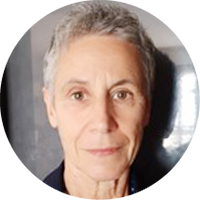
Dr. Letizia De Maria
Ricerca sul Sistema Energetico - RSE S.p.A., Milan, Italy;
Degree in physics, University of Milan, senior researcher in RSE SpA, Transmission and Distribution Technologies Department, Milan, Italy. Member of the the National Electrotechnical Committee (CT10) on “Fluids for Electrotechnical Applications” since 2015 and Member of the Presidential Council, Italian Society for Optics and Photonics (SIOF) since 2017. Her main research interests include innovative optical sensors for monitoring electrical equipment of Transmission and Distribution network and, mainly, for the detection of oil-paper degradation markers in power transformers' insulating oil

Prof. Dr. Peter Lieberzeit
Department of Physical Chemistry, Faculty for Chemistry, University of Vienna, Vienna, Austria;
Professor for Physical Chemistry at the University of Vienna since 2016, before that at the Department for Analytical Chemistry (since 2011). Specialized in developing biomimetic recognitions matrices for a range of chemical and biological Analytes. Currently ~145 papers in Web of Science (h=33). Member of the Editorial Board of Sensors and Actuators B: Chemical; Chair of the International Steering Committee of IMCS conferences (International Meeting on Chemical Sensors).
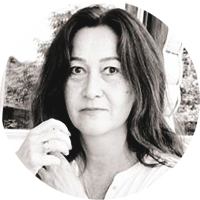
Dr. Dana Alina Magdas
National Institute for Research & Development of Isotopic & Molecular Technologies, Romania;
I graduated and received my PhD degree (2008) from the Faculty of Physics, Babes-Bolyai University, Cluj-Napoca, Romania. Currently, I am the Head of Mass Spectrometry, Chromatography and Applied Physics Department from National Institute for R&D of Isotopic and Molecular Technologies, INCDTIM, Cluj-Napoca, Romania. The research group’s activities I’m coordinated are mainly oriented towards the development of new analytical approaches and the identification of emerging markers for food and beverages authenticity assessment. The development of research is done in the form of research projects with academic and/or industry partnership. I have authored or co-authored over 100 research papers, 1 book and other 4 book chapers.
Prof. Dr. Saulius Juodkazis
Swinburne University of Technology, Australia;
Professor Saulius Juodkazis has physics and material science training. His cotutelle PhD was obtained in 1998 from Vilnius Univ., Lithuania and Lyon-I Univ., France. His current interests are in the fields of light-matter interactions occurring in small space (nanoscale) and time (femtoseconds) domains. He planned, established and directs a multi-user 3D Nanotechnology facility at Swinburne Univ. Technol., Melbourne, Australia, which was open to users in 2011. He is SPIE and OSA Fellow.
Dr. Soon Hock Ng
Swinburne University of Technology, Australia;
Soon Hock is a research fellow at Swinburne University of Technology. He completed his BSc and BEng at Monash University, where he also completed his PhD in 2016, with a focus on lithography and the self-assembly of nanoparticles. He began working at the Melbourne Centre for Nanofabrication as a Process Engineer in the latter half of 2016 before perusing postdoctoral research in the Centre for Micro-Photonics at Swinburne University of Technology in early 2017. His research areas include: self-assembly of nanoparticles in lithographically defined templates, PVD and RIE of nanostructured thin films, energetic materials, spectroscopy, and recently, remote sensing methods.

Dr. Vijayakumar Anand
Swinburne University of Technology, Australia;
Dr. Vijayakumar Anand is a Nanophotonics Research Fellow at the Optical Sciences Center, Swinburne University of Technology. He completed his Bachelor and Master degrees in Physics from The American College, India in 2004 and 2007 respectively. He completed his second Master degree in Laser Technology from College of Engineering, Anna University in 2009 and Ph.D from Indian Institute of Technology Madras in 2015. He was a PBC outstanding postdoctoral researcher at Ben Gurion University Israel from 2015-2018 and Monbukagakusho Researcher at Osaka University, Japan from 2010 to 2012. He is one of the recipients of JSPS fellowship in 2020. He has published more than 45 journal articles and 32 conference proceedings articles, a best-selling tutorial text book on Diffractive Optics, two book chapters and two patents. He has received the RAITH Micrograph Award for the year 2021, outstanding reviewer award from Optical Society of America in 2019. He has served as a co-guest editor of a special issue on holography for Applied Sciences journal. He is currently serving as co-guest editor for special issues on holography for Journal of Imaging and Applied Physics B.

Dr. Małgorzata Nowacka
Warsaw University of Life Sciences – SGGW;
Dr. Małgorzata Nowacka is an associate professor at the Institute of Food Sciences at the Warsaw University of Life Sciences. She is a specialist in the field of food drying, the application of non-thermal food processing methods, food storage and safety, and packaging. Her scientific and research interests focus mainly on engineering issues in food technology, especially the physical properties of raw materials and mainly plant products. In recent years, together with his team, he has been conducting research on the use of unconventional, innovative techniques (pulsed electric field, ultrasound) as preliminary treatments and supporting heat and mass transfer processes. Additionally, her research interests include packaging intended for contact with food, designing new products and their safety. Since 2019, she has been a member of the Polish Young Academy of the Polish Academy of Sciences.
- A. Optics and Lasers
- B. Chemistry
- C. Applied Biosciences and Bioengineering
- D. Environmental and Sustainable Science and Technology
- E. Applied Physics
Sponsors and Partners
organizer


media partner







Live Session 1
19 October 2021
Live Session 2
20 October 2021
Live Session 3
28 October 2021
Live Session 4
29 October 2021
Optical and Fibre Optic Measurement Systems
by
Marcelo Werneck
The Use of Non-thermal Technologies to Enhance Drying Process
by
Małgorzata Nowacka