The 28th International Electronic Conference on Synthetic Organic Chemistry
the chair
- General Organic Synthesis;
- Chemistry of Bioorganic, Medicinal and Natural Products;
- Microwave Assisted Synthesis;
- Polymers and Supramolecular Chemistry;
- Computational Chemistry.
We hope you can join this exciting event and support us in making it a success. We look forward to receiving your research papers and welcoming you to this 28th edition of the electronic conference.
Please feel free to contact us if you have any questions.
Sincerely,
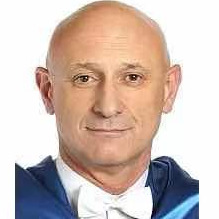
Dr. Julio A. Seijas
President of the 28th Electronic Conference on Synthetic Organic Chemistry (ECSOC-28)



Meet the Event Chair
Important Dates

- Abstract submission deadlineJul 26, 2024
- Abstract acceptance notificationAug 23, 2024
- Full file submission deadlineSep 20, 2024
Meet Our Speakers

Prof. Georg Manolikakes
RPTU Kaiserslautern-Landau, Germany;
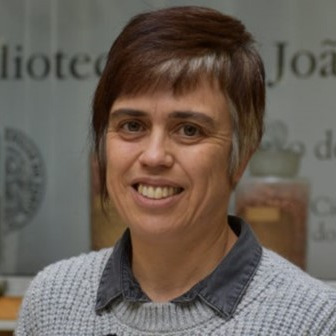
Dr. Ana M.G. Silva
University of Porto, Portugal;
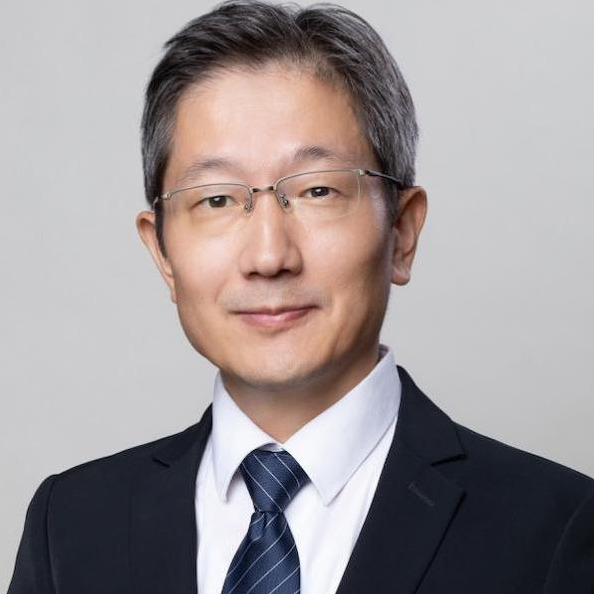
Prof. Hajime Hirao
The Chinese University of Hong Kong, China;
- S1. General Organic Synthesis
- S2. Chemistry of Bioorganic, Medicinal and Natural Products
- S3. Microwave Assisted Synthesis
- S4. Polymer and Supramolecular Chemistry
- S5. Computational Chemistry
Sponsors and Partners
organizer



sponsor



partnering society

media partner



Important Updates:
Thank you for the strong support! The 28th edition of ECSOC is now CLOSED.
We invite all participants to participate in the 2025 edition, The 29th International Electronic Conference on Synthetic Organic Chemistry (ECSOC-29).
Please click here for more details: https://sciforum.net/event/ecsoc-29
======================================
1. Publications in the Molecules journal
Participants of this conference are cordially invited to contribute a full manuscript to a dedicated Special Issue in the journal Molecules (ISSN 1420-3049, IF 4.2). Papers presented at the conference will be granted a 20% discount in the Special Issue. Kindly note that submission to the Molecules journal is independent of the conference proceedings and will follow the usual process of the journal, including peer-review, APC, etc.
For more information and queries on publication opportunities for special issues, please contact: molecules@mdpi.com
2. Proceeding Paper Publication
The free publication of the proceedings paper (3-6 pages) in the Chemistry Proceedings journal (ISSN 2673-4583) is currently under process.
For more information and queries regarding publications in Chemistry Proceedings journal, please contact: chemproc@mdpi.com
======================================
Download your Certificate of Participation
Please access this link here to download the certificate of participation for ECSOC-28:
https://sciforum.net/dashboard/user/certificates
Kindly note that only participants who had previously registered for the conference by the registration deadline will have access to the participation certificates. For registered participants, please log-in with the email which you had registered with to your sciforum account to access the certificate of participation.
After careful deliberation and on behalf of the event chair and scientific committee of ECSOC-28, we are pleased to announce the winners of the Best Paper Award and Best Poster Award.
Congratulations on the outstanding submissions!
We will be directly contacting the selected winners regarding the next steps. Please note that we will be emailing the "submitting users" for each of the awarded sciforum IDs.
The Best Paper Award has been awarded to:
|
Sciforum ID |
Title |
Authors |
| sciforum-102096 | Organocatalytic Cascade Reactions for the Synthesis and Diversification of Privileged Structures. | Alberto Medina-Ortíz David Cruz-Cruz Clarisa Villegas-Gómez |
| sciforum-099958 | Impact of AgNP on the Inhibition of Fecal Coliforms by 3DP-modified Chitosan Membranes | Anthony C. Ogazi Peter. O. Osifo |
| sciforum-102088 | Synthesis of Peptide-NSAID Hybrid Compounds and their Selectivity in Inhibiting the Dual Cox-Lox System Described through Docking and Molecular Dynamics | Juan Carlos Jiménez-Cruz Ramón Guzmán-Mejía Pedro Navaro-Santos Hugo A. García-Gutiérrez Julio Cesar Ontiveros-Rodríguez Rafael Herrera-Bucio Judit A. Aviña-Verduzco |
| sciforum-096945 | A Novel Method of Iodination and Azo Bond Formation by Nitrogen Triiodide | Branislav Pavilek Dušan Bortňák Viktor Milata Daniel Végh Michaela Halinkovičová |
The Best Poster Award has been awarded to:
|
Sciforum ID |
Title |
Authors |
|
sciforum-102076 |
Study of the Interaction of Benzene-1,4-Dicarboxamide with Methylmalonyl Dichloride |
Anastasia Andreevna Varvarkina |
|
sciforum-101541 |
Synthesis of Triazolyl Derivatives based on Thiazolo [3,2-a] Pyrimidine Propargyl Ethers |
Elina Gabitova |
On behalf of the ECSOC-28 organizing committee, we thank you for your participation.
Please click on this link here to access and download your certificate of participation:
https://sciforum.net/dashboard/user/certificates
Kindly note that only participants who had previously registered for the conference by the registration deadline will have access to the participation certificates. For registered participants, please log-in with your sciforum account to access the certificate of participation.
Rapid Assembly of Complex 3D Heterocycles from Simple Enamide Building Blocks
Professor Georg Manolikakes
RPTU Kaiserslautern-Landau, Germany
Description
The rapid construction of three-dimensional heterocycles containing multiple stereogenic centres represents a key challenge in modern synthetic and medicinal chemistry. Aliphatic heterocycles with a defined three-dimensional structure offer intriguing opportunities to improve the activity as well as the pharmacokinetic profile of potential drug candidates. Hence, there is a sustained interest in the development of novel approaches for an efficient synthesis of three-dimensional heterocyclic scaffolds. In the last years, enamides have emerged a versatile tools for the stereoselective synthesis of complex molecules containing multiple stereocenters. Herein, novel methods for a rapid and highly modular synthesis of structurally divers three-dimensional heterocyclic scaffolds from enamides as simple common building blocks will be presented:
i) a novel method for the diastereoselective construction pyrimido[2,1-a]isoindoles bearing three contíguos stereocenters, a so far difficult to access, heterocyclic scaffold, with three continuous stereocenters.
ii) novel apporaches for the diastereo- and enatioseletricve synthesis of densely susbtitued spiroisoindolinones.
iii) a diastereoselective synthesis of isoindoloquinolinones contaning three stereogenic centres.
iv) a novel domino reaction for the synthesis of tetrahydropyrans containing five continuous stereogenic centers with an exceptionally high degree of diastereoselectivity.
These methods enable the rapid assembly of structurally complex molecules bearing multiple continuous stereocenters in a very efficient and operationally simple manner.
Optimizing Microwave-Assisted Synthesis of a Novel FRET-Based Rhodamine Sensor for Hg(II) Ion Detection
Dr. Ana M.G. Silva
University of Porto, Portugal
Description
Rhodamines and their analogues, including rosamines, are an important class of fluorescent dyes known for their high molar absorptivity and intense fluorescence in the visible spectrum. Their successful applications as fluorescent sensors and bioimaging probes have led to the exploration of new strategies for creating high-performance molecules, primarily through structural modifications of the xanthene ring. In recent projects, we have designed fluorescent rhodamine chelators with specific responses to different metal ions in various types of matrices. We strategically couple analyte specific chelators to rhodamines to produce molecules that exhibit a fluorescent turn-off or turn-on response.
In this work, we are presenting the results obtained with a new fluorescence resonance energy transfer (FRET)-based sensor for the selective detection of Hg(II) ion. Through an optimized strategy under microwave-assisted protocols, three dansyl-rhodamine derivatives were prepared. The influence of the isothiocyanate in the formation of the thiosemicarbazide recognition site of the sensor was explored using different substituents. The most promising sensor, denoted as RD1, exhibited a two-stage response mechanism towards Hg(II), which was further corroborated by density functional theory (DFT) calculations.
------------------------------------------------------------------------------------------------------------------------------------------------------------------------------------
Cytochrome P450 Compound I: Reactivity and Bonding
Professor Hajime Hirao
The Chinese University of Hong Kong, China
Description
Cytochrome P450 enzymes (P450s) are found in a wide range of organisms and form a superfamily of heme proteins with significant implications across various scientific fields, including biology, medicine, pharmaceutical sciences, and agriculture. The critical roles of human P450s in drug metabolism, in particular, underscore their broad relevance to human health. From a simulation perspective, P450s offer a wealth of fascinating scientific challenges that warrant in-depth investigation, with one prominent example being the mechanism of drug metabolism by human P450s. While substantial progress has been made in understanding P450-catalyzed oxidative substrate transformations over the past few decades, our microscopic insight into biocatalysis in human P450s, especially in relation to drug metabolism, remains limited. This is largely due to their flexible, sizable active-site pockets, the complex structures of substrate drug compounds, and the scarcity of crystal structures of P450–drug complexes. Additionally, the bonding nature of the reactive iron(IV)-oxo, known as Compound I (Cpd I), which drives these transformations, is a fundamental question that still requires exploration. In this presentation, I will discuss our recent findings in these areas.
Mr. Parker Hou
Mr. Benjamin Tay
Email: ecsoc@mdpi.com
For inquiries regarding submissions and sponsorship opportunities, please feel free to contact us.