The 27th International Electronic Conference on Synthetic Organic Chemistry
ECSOC-27 is closed.
Thank you for your participation! You may still access the materials of each submission, including the peer-reviewed paper, poster, or presentation.
The certificate of participation can be accessed HERE.
the chair
- General Organic Synthesis;
- Bioorganic, Medicinal and Natural Products Chemistry;
- Microwave Assisted Synthesis;
- Polymer and Supramolecular Chemistry;
- Computational Chemistry.
The conference proceedings papers and presentations will be available on https://ecsoc-27.sciforum.net for discussion during 15–30 November 2023 and will be published in the Chemistry Proceedings (ISSN: 2673-4583). journal. Once the conference is over, a CD-ROM (ISBN 978-3-0365-6313-8) will be published with the contents of the conference, and it will be available upon request (organic@usc.es) for EUR 75 each.
Extended and expanded versions of conference proceedings papers can be submitted to a Special Issue in the journal Molecules (ISSN 1420-3049, Impact Factor: 4.6 (2022); 5-Year Impact Factor: 4.9 (2022)) after the conference, with a 20% discount on the Article Processing Charges.
We hope you will be able to join this exciting event and support us in making it a success. We look forward to receiving your research papers and to welcoming you at this 27th edition of the e-conference.
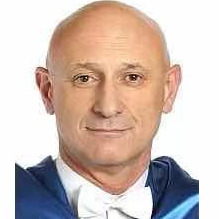
Dr. Julio A. Seijas Vázquez
Chair of the 27th Electronic Conference on Synthetic Organic Chemistry (ECSOC-27)



Meet the Event Chair
Important Dates

- Abstract submission deadlineOct 01, 2023
- Abstract acceptance notificationOct 06, 2023
- Full file submission deadlineOct 15, 2023
Meet Our Speakers
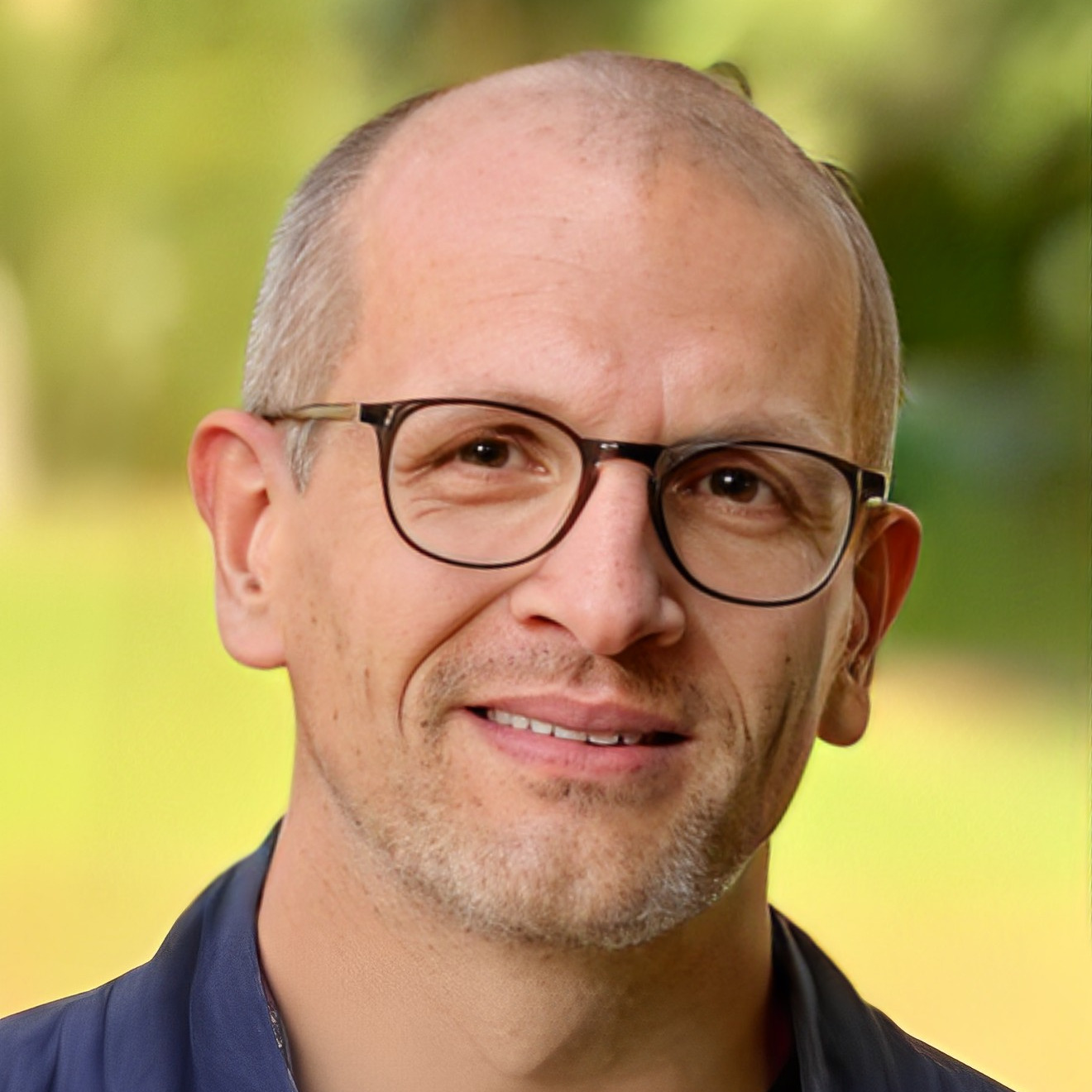
Prof. Dr. Mario Waser
Institute of Organic Chemistry, Johannes Kepler University Linz, Austria;
Mario Waser was born in Steyr, Austria in 1977 and studied chemistry at JKU Linz, Austria where he obtained his Ph.D. in 2005 in the group of Prof. Heinz Falk. After a postdoctoral stay with Prof. Alois Fürstner (Max-Planck Institut für Kohlenforschung, Mülheim, Germany), he spent two years as an R&D chemist working for DSM. In 2009 he started his independent career at JKU Linz and in 2014 he obtained his habilitation (venia docendi) and became Associate Professor. In 2020 he was promoted to Full Professor for Organic Stereochemistry and in 2021 he was appointed as the Head of the Institute of Organic Chemistry at JKU. His main research interests are on the design and application of asymmetric organocatalysts (i.e. quat. ammonium salt-based ion pairing catalysts) and on the development of asymmetric organocatalytic synthesis methods.
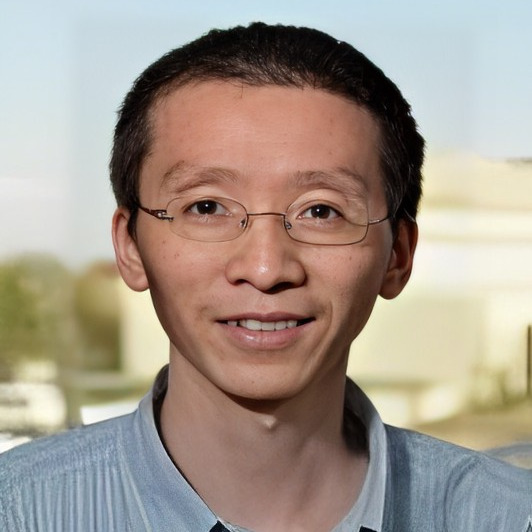
Dr. Haibo Ge
Department of Chemistry and Biochemistry, Texas Tech University, Lubbock, TX, USA;
Haibo Ge received his Ph.D. degree in Medicinal Chemistry from The University of Kansas in 2006 and then moved to The Scripps Research Institute for his postdoctoral study. He began his independent academic career at the Department of Chemistry and Chemical Biology at Indiana University—Purdue University Indianapolis in 2009 and relocated to the Department of Chemistry and Biochemistry at Texas Tech University in 2020. Research in his group is mainly focused on the development of novel methods for carbon–carbon and carbon–heteroatom bond formation reactions via transition-metal-catalyzed C–H functionalization.
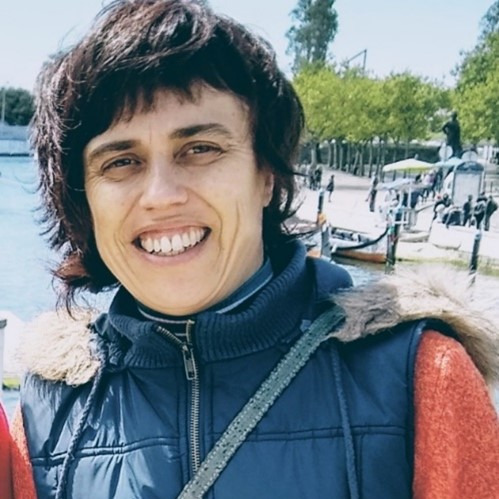
Dr. Ana M. G. Silva
LAQV/REQUIMTE, Department of Chemistry and Biochemistry, Faculty of Sciences, University of Porto, Portugal;
Dr. Ana M. G. Silva received her Ph.D. in Chemistry from UAveiro in 2002 and completed her graduation in Chemistry, Food Chemistry in 1997 at the same University. In 2003, she was awarded an FCT post-doctoral fellowship (SFRH/BPD/8374/2002) at UAveiro, where she acquired solid expertise in organic chemistry, particularly in porphyrin chemistry. During the Ph.D. and Post-doc periods, she carried out 3 internships with the research groups of Prof A. Dondoni (UFerrara, Italy) and Prof O. Kappe (UGraz, Austria), where she learned advanced strategies to synthesize carbohydrate derivatives and developed various microwave protocols related to the porphyrins derivatization. Since 2007, she holds a researcher position (with different contractual levels) at REQUIMTE, UPorto. While maintaining an interest in porphyrin chemistry, she started a new line of research dedicated to the synthesis, characterization, and development of strong bright xanthene fluorophores using sustainable chemistry approaches, for applications in medicine and environmental remediation.
She authored/co-authored more than 70 papers in international peer-review journals (h-index of 25 with 1582 total citations), 3 section(s) of books, 1 patent(s) registered, and gave more than 40 oral presentations to international/national meetings. In 2016 she was congratulated as a coordinator of the project M-ERA-NET/0005/2014. AMGS is a member of Sociedade Portuguesa de Química (SPQ) and the Society of Porphyrins and Phthalocyanines (SPP).
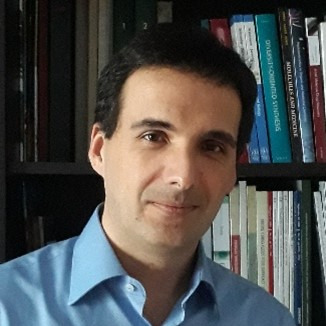
Prof. Dr. Andrea Trabocchi
Department of Chemistry “Ugo Schiff”, University of Florence, Italy;
Andrea Trabocchi is Associate Professor of Organic Chemistry at the University of Florence, Italy. He obtained a PhD in Chemical Sciences from the University of Florence, a specialization in Clinical Biochemistry from the University of Rome-Tor Vergata, and received training on peptide chemistry at Imperial College, UK. Following post-doctoral activity at University of Florence in combinatorial chemistry, he started independent career in the same University with research interests in the fields of heterocyclic chemistry and small molecule drug discovery. Medicinal chemistry projects involve peptidomimetic chemistry applied to oncology and infectious diseases particularly focusing on the development of enzyme inhibitors. He is also involved in molecular imaging projects as deputy director of a preclinical imaging center at University of Florence. He authored 96 papers and filed 4 patents on small molecule synthesis and biomedical applications. Editorial appointments include three books on Diversity-Oriented Synthesis, Peptidomimetics, and Small Molecule Drug Discovery. He is an associate editor of Frontiers in Chemistry and a member of the editorial board of Molecules, Medicinal Chemistry Section.
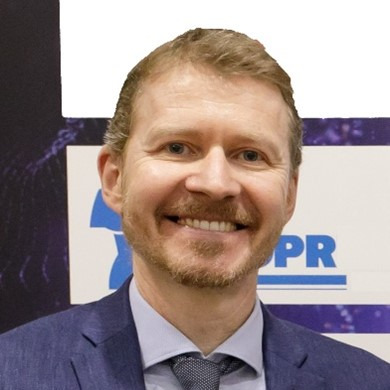
Prof. Dr. Philippe Compain
Laboratoire d'Innovation Moléculaire et Applications (UMR 7042), ECPM-CNRS, Université de Strasbourg, Université de Haute Alsace, France;
Pr. Philippe Compain received his Engineer degree in chemistry at CPE Lyon. In 1998, he was awarded the Dina Surdin Prize from the French Chemical Society for his Ph. D research on the synthesis of spiro alkaloids by way of 1,2-chirality transfer (group of Prof. J. Goré, University of Lyon I). After a postdoctoral stay at Montreal with Prof. S. Hanessian on hetero Diels-Alder reactions, he was appointed Chargé de Recherche (researcher) at CNRS in the group of Prof. O. R. Martin in Orléans. In 2008, he accepted a full professorship at the University of Strasbourg. He is now a Professor of Organic Chemistry in this University and at the European Engineering School of Chemistry, Polymers and Material Science (ECPM). His research interests span from the development of new synthetic methodologies to the synthesis of carbohydrate mimics of biological interest. He is co-editor of a book untitled Iminosugars: from synthesis to therapeutic applications (Wiley-VCH). In 2010, Pr. Compain has been made Junior Member of the Institut Universitaire de France (IUF) and elected Fellow of the Royal Society of Chemistry in 2016. He is currently President of the Groupe Français des Glycosciences (GFG, the French network in Glycoscience).
- S1. General Organic Synthesis
- S2. Bioorganic, Medicinal and Natural Products Chemistry
- S3. Microwave Assisted Synthesis
- S4. Polymer and Supramolecular Chemistry
- S5. Computational Chemistry
Sponsors and Partners
organizer
sponsor
partnering society

media partner



Dr. M. Pilar Vázquez-Tato
Universidade de Santiago de Compostela, Spain
Email: pilar.vazquez.tato@usc.es
Mr. Parker Hou
Mr. Russell Wang
Email: ecsoc@mdpi.com
For inquiries regarding submissions and sponsorship opportunities, please feel free to contact us.